V. Augustine of Hippo — Orientation as Restlessness
Orientation was never yours to generate.

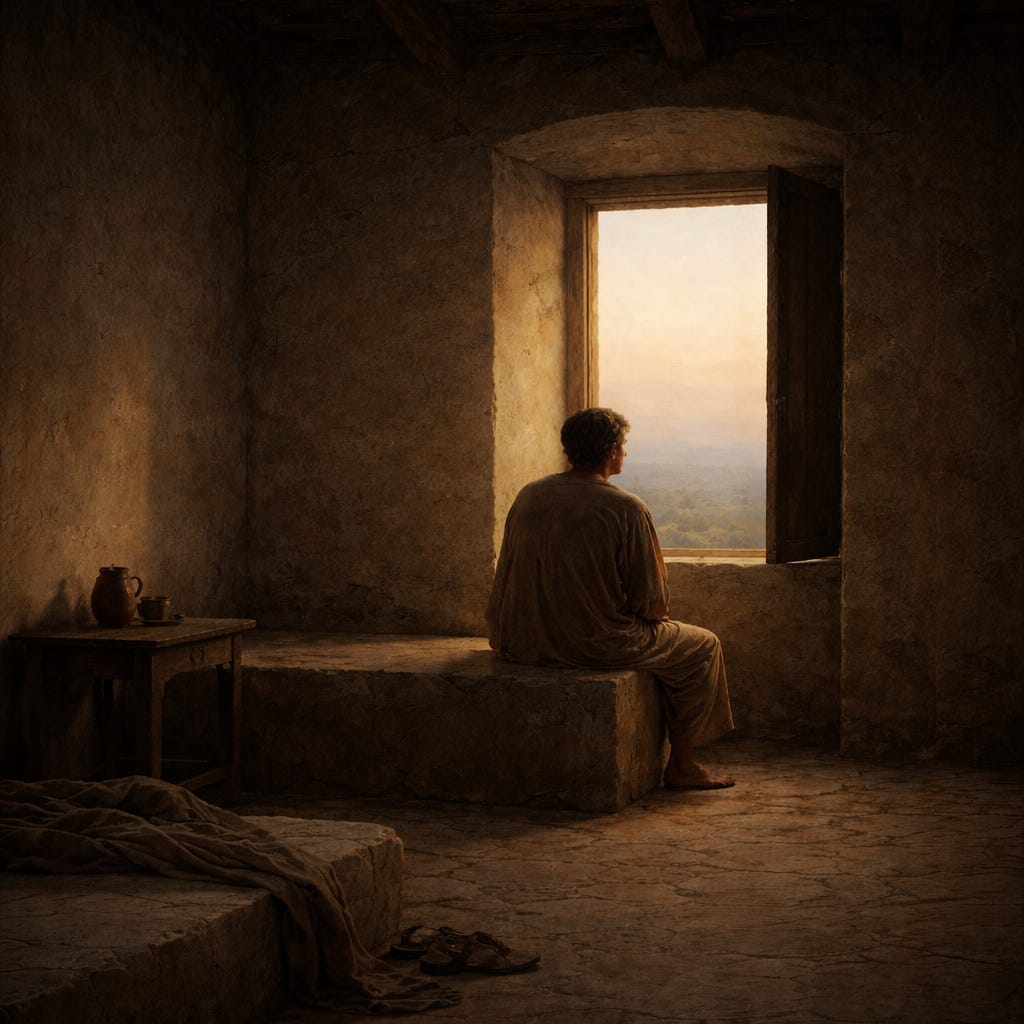
Orientation is not achieved by insight, but by yielding to what commands.
Restlessness
(Residual Narrative™)
Augustine does not arrive at truth.
He arrives at restlessness.
That separates him from those before him.
Others sought order.
In nature.
In reason.
In history.
In will.
In structure.
Each relocated authority.
Each refined orientation.
None found rest.
Augustine says plainly:
I could not settle myself.
Not for lack of intelligence.
He knew the systems.
Rhetoric.
Manichaeism.
Platonism.
Skepticism.
Moral striving.
He inhabited them.
Nothing held.
He does not dramatize this.
He names it.
Restlessness.
This is not mood.
Not anxiety.
Not temperament.
It is the condition of a self
that has exhausted every available orientation
and cannot stand.
This destabilizes philosophy.
Philosophy could always claim:
We have not yet found the right account.
Augustine says:
The account is not the issue.
He does not say:
I misunderstood the good.
I lacked discipline.
I needed more clarity.
He says:
I was divided.
I could not will what I knew.
Insight did not align me.
The problem is no longer intellectual.
It is personal.
Here, philosophy loses sovereignty.
If understanding does not produce alignment,
then intelligence cannot secure orientation.
Augustine does not respond
with a better principle.
He does not synthesize.
He confesses:
Orientation cannot be generated
from within the self.
That is the break.
Before him, the assumption held:
If I understand sufficiently,
I will stand rightly.
Augustine:
I understood.
I did not stand.
That sentence closes an era.
From this point, philosophy may proceed.
But it proceeds wounded.
It can analyze desire.
It can refine language.
It can critique illusion.
It cannot produce rest.
That is not yet theology.
It is observation.
The self, left to itself, circulates.
Augustine does not rebel.
He does not aestheticize failure.
He does not glorify endurance.
He yields.
Not as achievement.
As interruption.
Something addresses him
that is not concept.
Something commands
that is not derived
from his reasoning.
He does not claim mastery.
He describes being broken.
Augustine cannot crown philosophy.
He abandons its central premise:
That the self can orient itself
by its own power.
After him, two postures remain.
Silence.
Or obedience.
—
Residual Narrative™
A Hermit, Here
Residual Narrative™ removes persuasion, ornament, and argument.
It isolates what remains after explanation collapses.
Events are not treated as origin, but as exposure.
(Lingua Latina)
Inquietudo
(Residual Narrative™)
Augustinus non ad veritatem pervenit.
Ad inquietudinem pervenit.
Hoc eum a prioribus separat.
Alii ordinem quaesiverunt.
In natura.
In ratione.
In historia.
In voluntate.
In structura.
Auctoritatem collocaverunt.
Orientationem expoliverunt.
Quietem non invenerunt.
Augustinus aperte dicit:
Me ipsum stabilire non potui.
Non propter defectum ingenii.
Systemata noverat.
Rhetoricam.
Manichaeismum.
Platonismum.
Scepticismum.
Conatum moralem.
In eis habitavit.
Nihil tenuit.
Non dramatizat.
Nomine appellat.
Inquietudo.
Haec non est affectus.
Non anxietas.
Non temperamentum.
Est conditio animi
omnes orientationes expertum
nec stare valentis.
Hoc philosophiam labefactat.
Philosophia semper poterat dicere:
Rectam rationem nondum invenimus.
Augustinus dicit:
Ratio ipsa non est quaestio.
Non dicit:
Bonum male intellexi.
Disciplina defuit.
Claritatis opus erat.
Dicit:
Divisus eram.
Velle non poteram quod noveram.
Scientia me non ordinavit.
Quaestio non est intellectualis.
Est personalis.
Hic philosophia potestatem amittit.
Si intellectus orientationem non parit,
ingenium securitatem dare non potest.
Augustinus non respondet
novo principio.
Non componit.
Confessus est:
Orientationem ex se ipso
oriri non posse.
Hoc est discrimen.
Ante eum supponebatur:
Si satis intellego,
recte stabo.
Augustinus:
Intellexi.
Non steti.
Haec sententia aetatem claudit.
Ex hoc loco philosophia pergere potest.
Sed vulnerata.
Desiderium examinare potest.
Linguam expolire potest.
Illusionem detegere potest.
Quietem dare non potest.
Hoc nondum theologia est.
Est observatio.
Animus sibi relictus
circuit.
Augustinus non rebellat.
Non aesthetizat defectum.
Non glorificat tolerantiam.
Cedit.
Non ut victoria.
Ut interruptio.
Aliquid eum alloquitur
quod non est conceptus.
Aliquid imperat
quod non ex ratione eius oritur.
Non se dominum dicit.
Se fractum describit.
Augustinus philosophiam non coronat.
Praemissam centralem relinquit:
Animus se ipse ordinare potest.
Post eum duo habitus manent.
Silentium.
Aut obedientia.
—
Residual Narrative™
A Hermit, Here
Residual Narrative™ persuasionem, ornamentum, argumentum removet.
Id quod manet post explanationem collapsam separat.
Eventus non ut origo, sed ut revelatio tractantur.